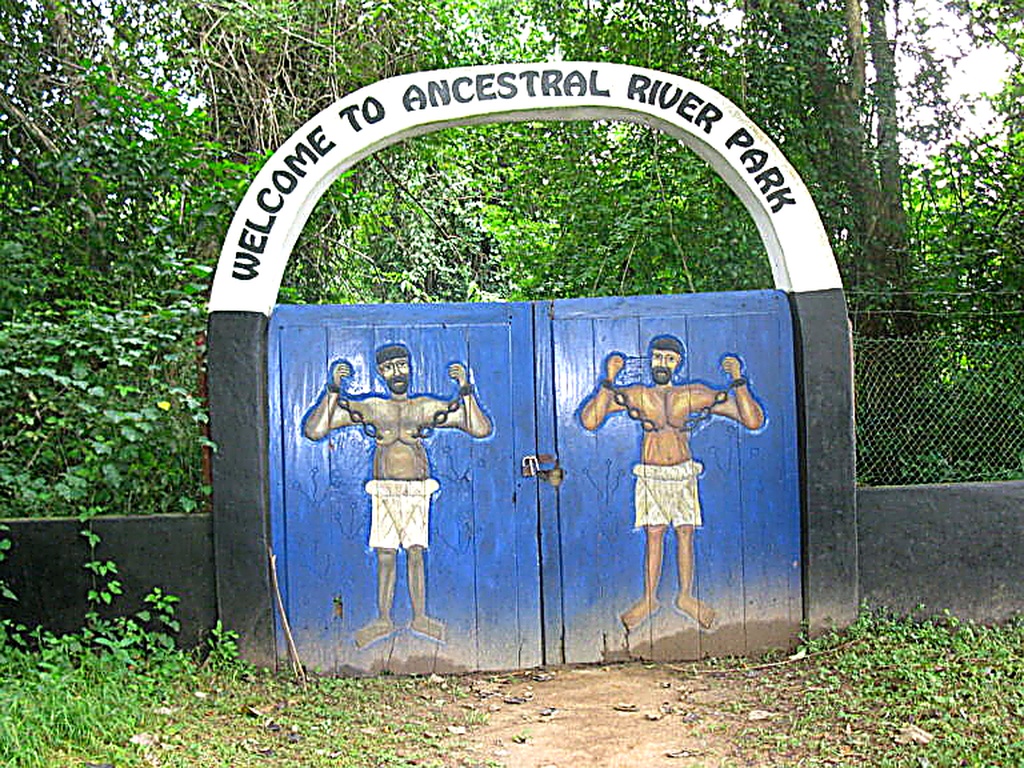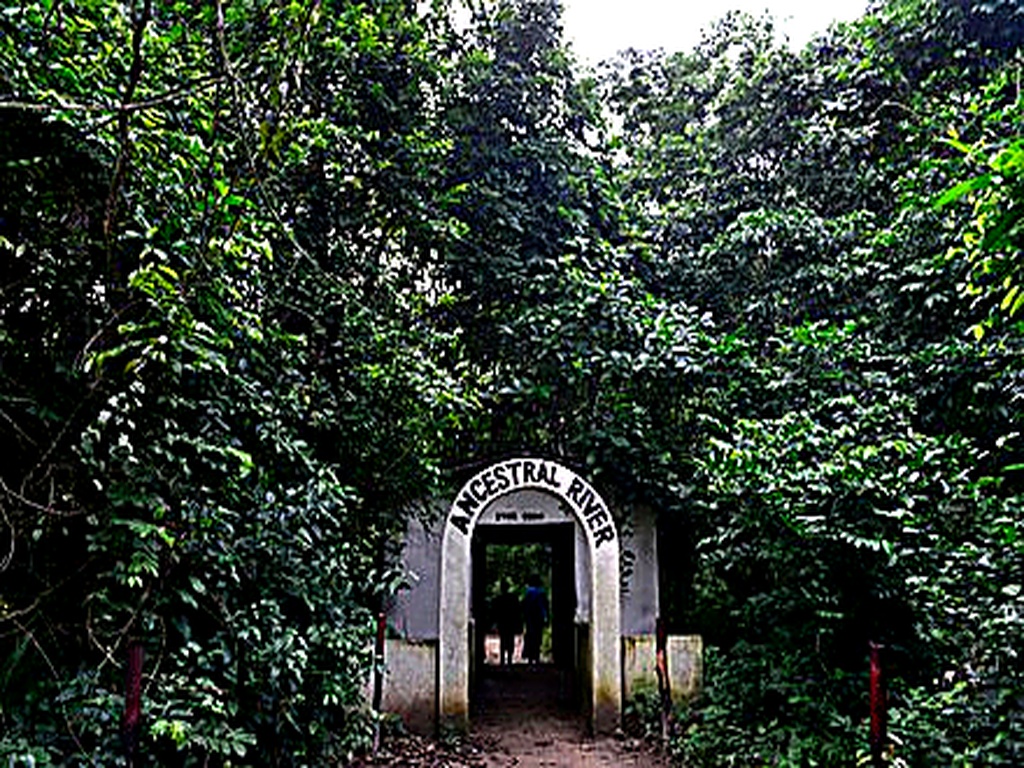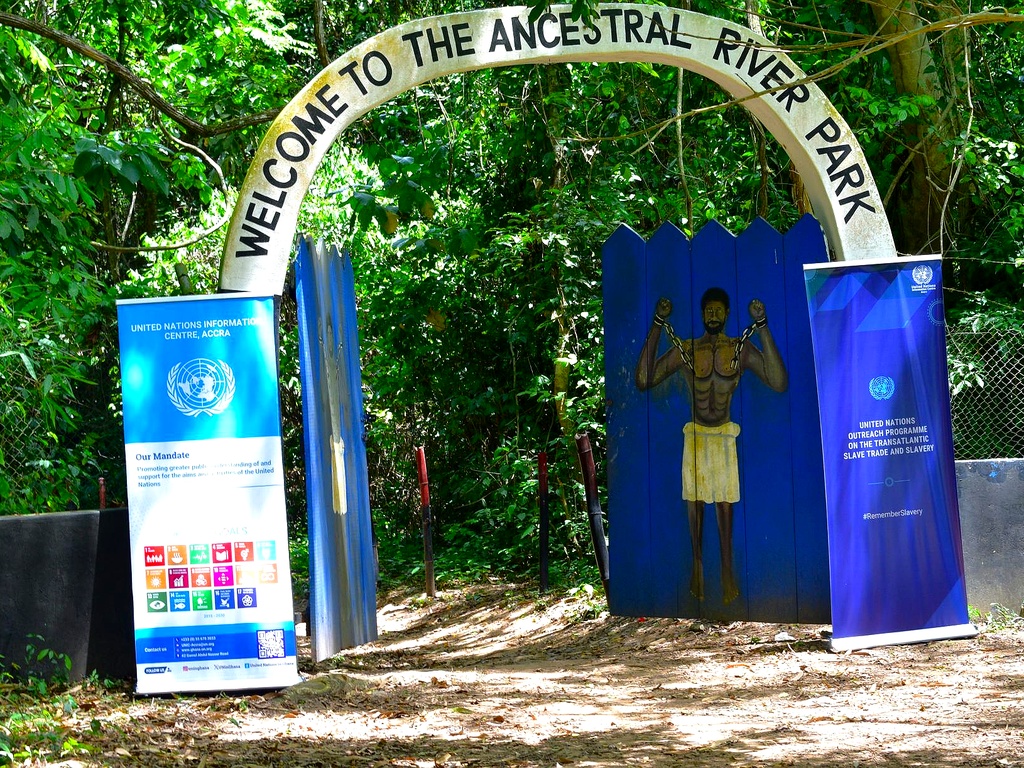
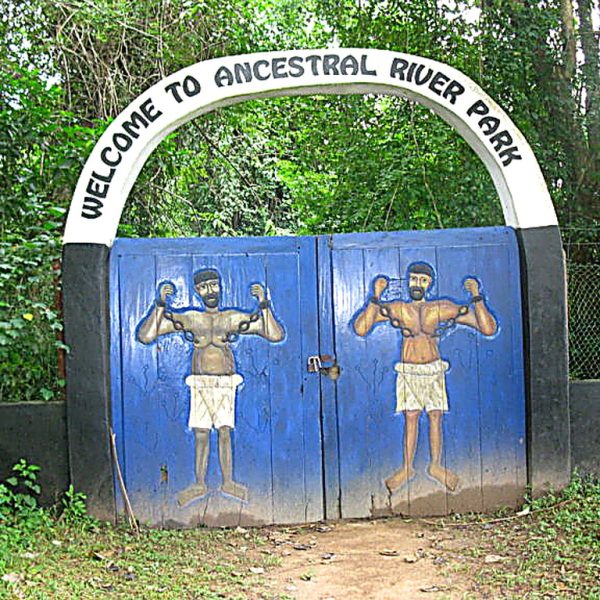
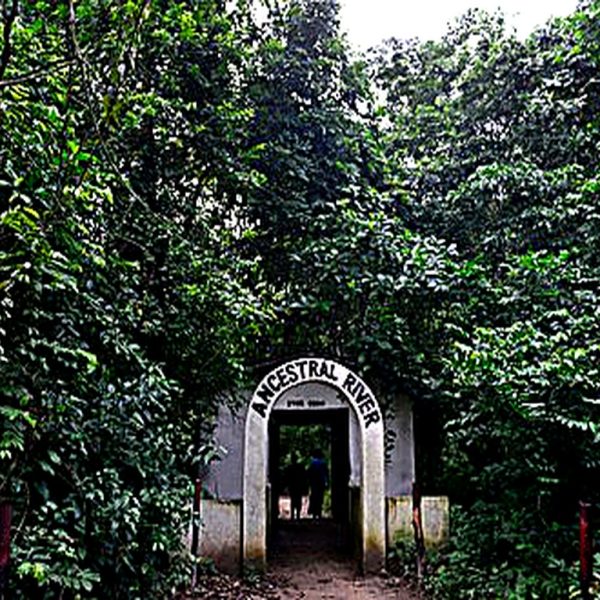
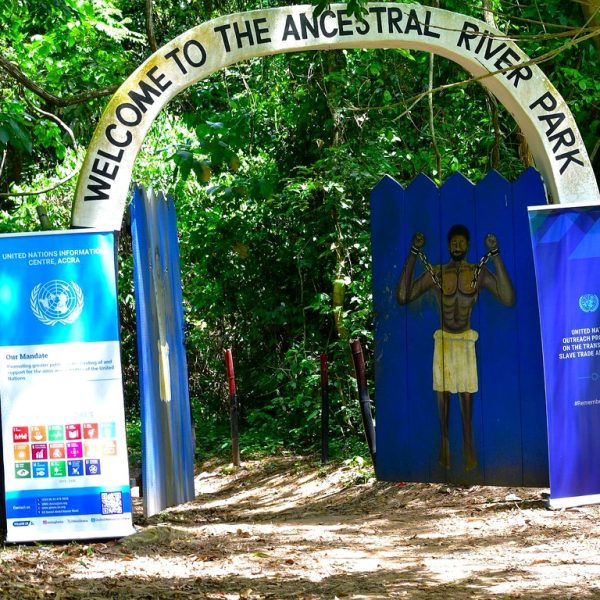
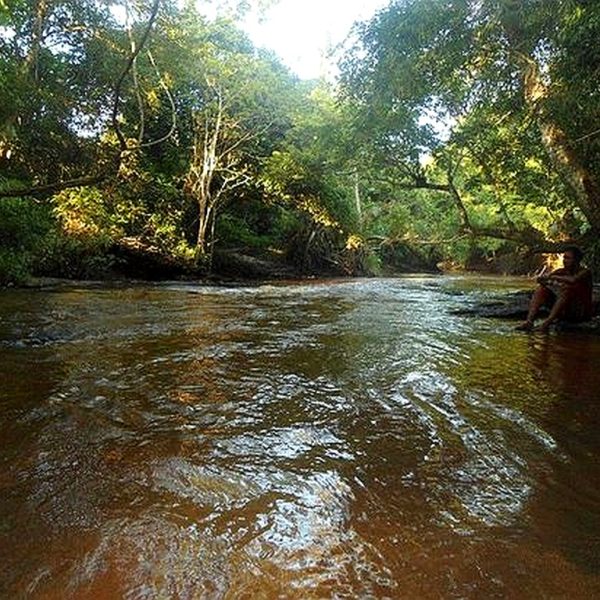
The Assin Manso Slave River Site is one of Ghana’s most important heritage sites connected to the Trans-Atlantic Slave Trade. It is located in the town of Assin Manso, about 40 km from Cape Coast on the Cape Coast–Kumasi highway.
Historical Significance
Assin Manso was a major inland slave market and an important stop on the route used to transport enslaved Africans from northern Ghana and neighboring regions to the coastal slave castles.
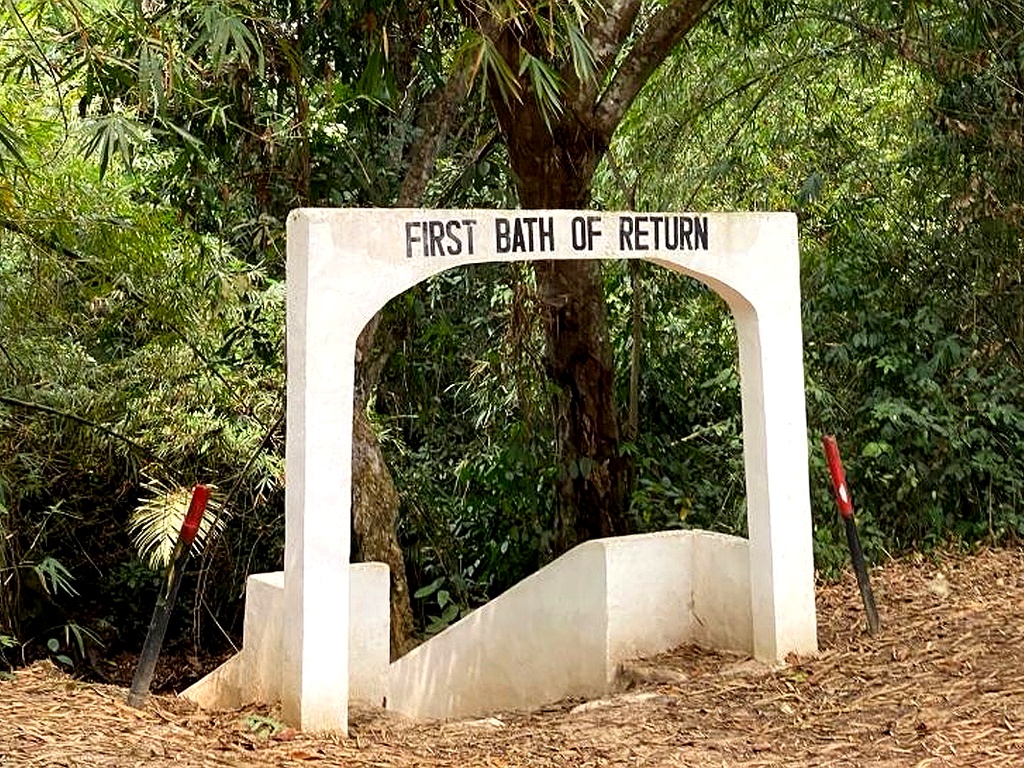
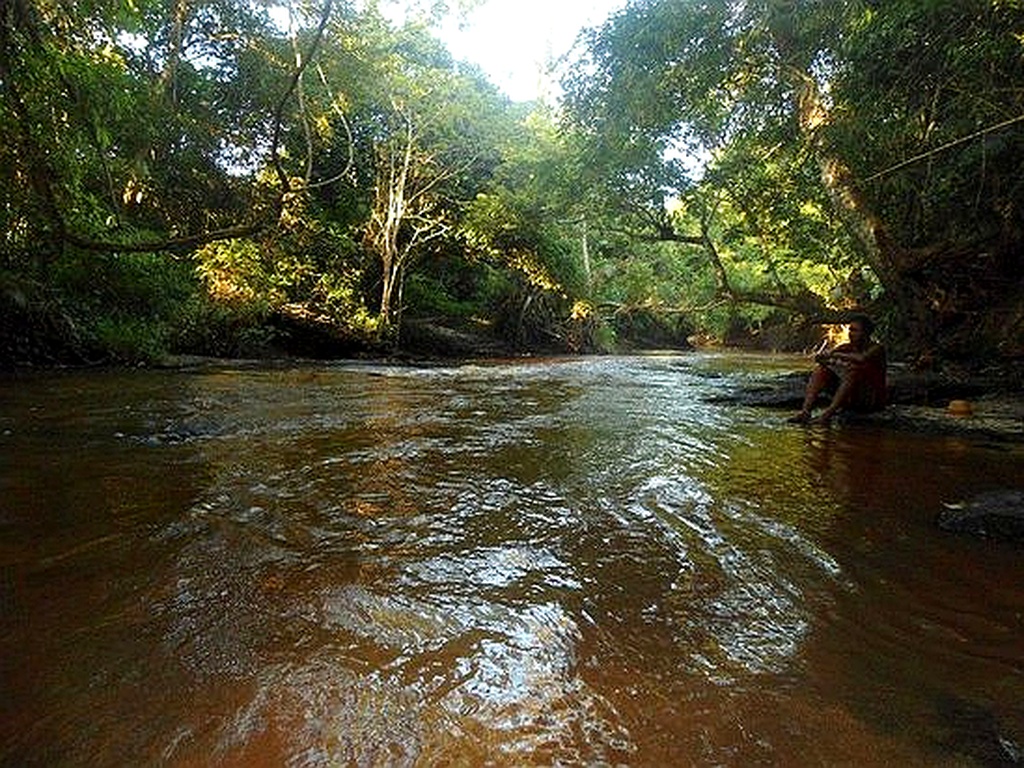
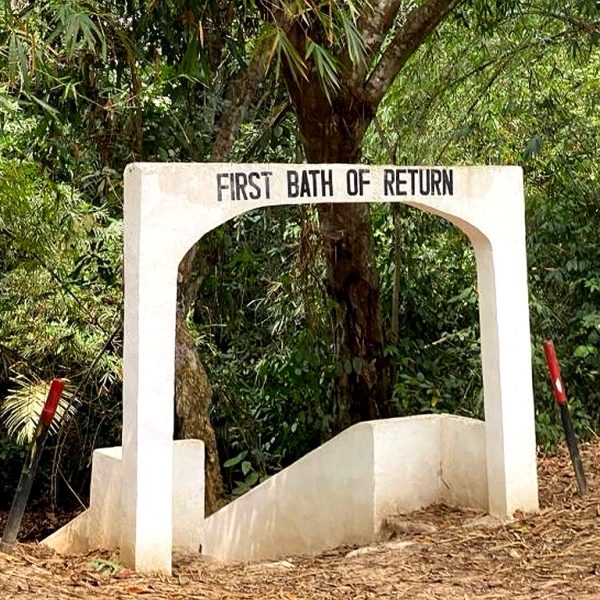
The river, known locally as Donkor Nsuo (“Slave River”), was where captives took their “Last Bath” before being marched to the slave dungeons at Cape Coast Castle and Elmina Castle.
Captives were often allowed to rest and recover there so that they could be sold at higher prices on the coast.
What to See
The Last Bath River (Donkor Nsuo) – the historic river where enslaved Africans took their final bath on African soil.
Ancestral Graveyard – contains the remains of two diasporan descendants reburied in 1998 during Emancipation Day commemorations.
Memorial Wall of Return – a symbolic site where many visitors from the African diaspora write their names to signify reconnection with their roots.
Interpretive Center and Heritage Walks – provide information about the slave route and Ghana’s role in the history of the trans-Atlantic slave trade.
Modern Importance
The site has become a major destination for Africans in the diaspora, especially since Ghana’s Year of Return initiative. Many visitors participate in remembrance ceremonies and heritage tours that help reconnect them with their ancestral history.
Location
📍 Assin Manso, Central Region, Ghana
Approximately 40 km north of Cape Coast on the Cape Coast–Kumasi road.
This site is often visited together with Cape Coast Castle, Elmina Castle, and Kakum National Park as part of a Central Region heritage tou